SPACE
Room to hop and stretch
The PDSA’s recommended minimum for two average rabbits is 3 m × 2 m × 1 m high. In 2024, 22% of pet rabbits lived in less.
How housing has changed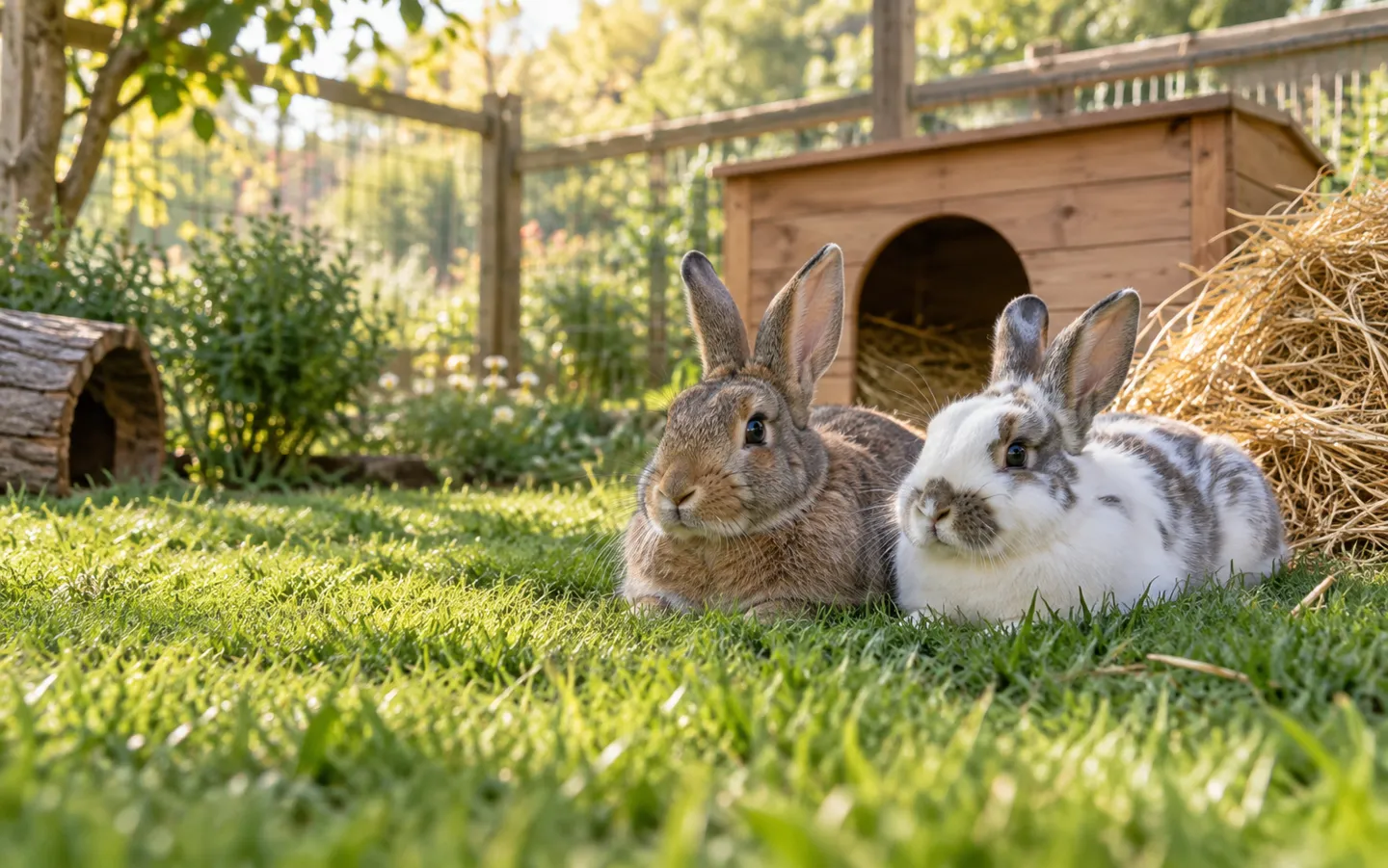
 doodlerabbit
PET RABBITS, EXPLAINED
ORYCTOLAGUS cuniculus
Around 700,000 rabbits live as pets in the UK. Most of what they need fits into three words.
Rabbits are often thought of as easy starter pets, yet surveys keep finding many living alone, in small hutches or on the wrong food. Here is what the PDSA, the Scottish Government’s welfare guidance and Royal Veterinary College researchers say, in plain English.
Plain English, with the sources linked.
Updated
Work out daily amountsTHE THREE NEEDS
The welfare basics, set out by the UK’s
largest vet charity and the Scottish Government.
SPACE
The PDSA’s recommended minimum for two average rabbits is 3 m × 2 m × 1 m high. In 2024, 22% of pet rabbits lived in less.
How housing has changedFOOD
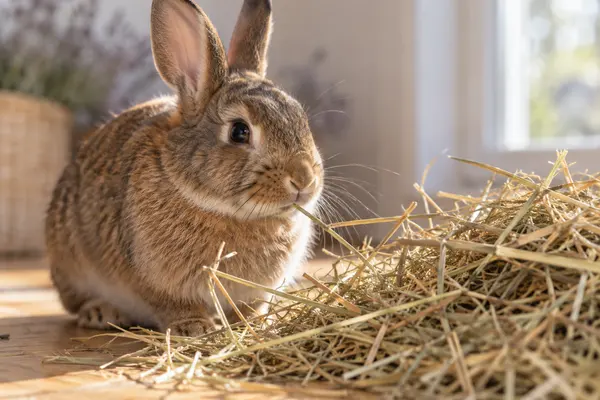
Around 85% of the diet should be hay and/or grass: at least a bundle as big as the rabbit, every day. Pellets are a small extra.
Work out daily amountsCOMPANY
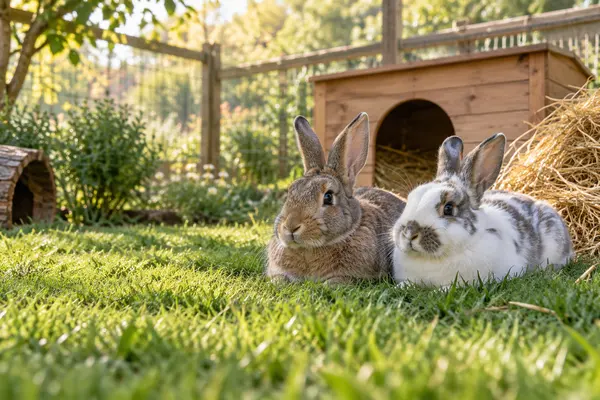
Rabbits benefit from another rabbit’s company, yet 42% of pet rabbits live alone and 8% live only with another species.
Ways to startDAILY AMOUNTS
Pick a body weight to see the most pellets the Scottish Government’s guidance allows each day, and roughly how much water a rabbit on a largely dry diet drinks.
Guide figures only, worked out from the published per-kilogram amounts. Fresh, clean water should always be available, and a vet can advise on your own rabbit.
TWO TRENDS WORTH KNOWING
The PDSA has surveyed UK owners since 2011.
Two of its rabbit measures, then and now.
72% to 50%
Rabbits without another rabbit
In 2011, 72% of pet rabbits lived alone or only with other species. By 2024 that was 50%, about 400,000 rabbits, and the figure has not moved since February 2020.
COMPANY · 2011 TO 2024
35% to 22%
Rabbits in inadequate housing
The share of rabbits kept in housing below the recommended standard fell from 35% in 2017 to 22% in 2024. Rabbits without another rabbit were more than twice as likely to be in poor housing (31% against 14%).
HOUSING · 2017 TO 2024
Diet has improved too: 74% of rabbits got the right amount of hay or grass in 2024, up from 46% in 2017, though 17% were still fed muesli as a main food.
GET STARTED
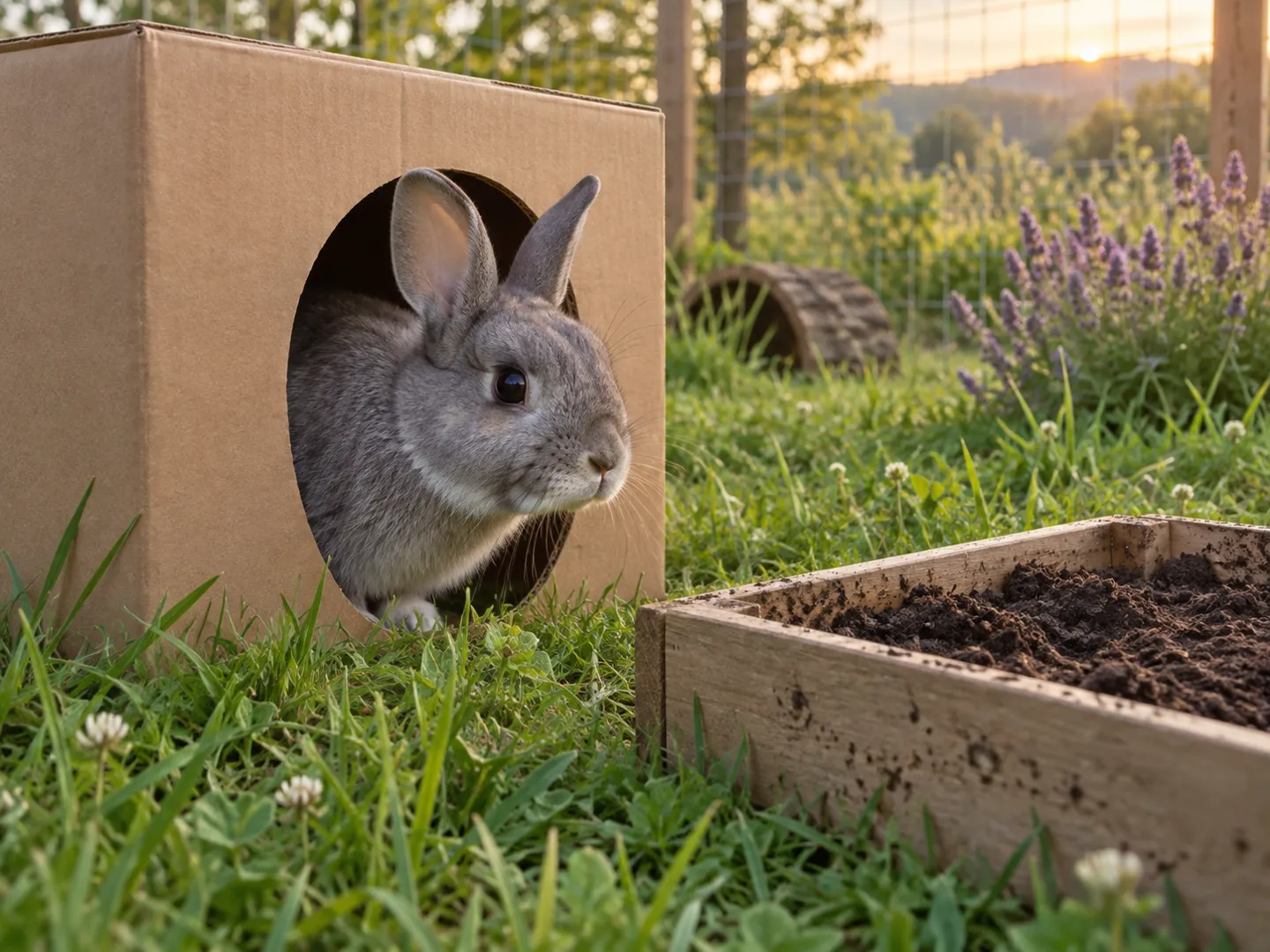
Compare your set-up with the 3 m × 2 m × 1 m minimum for two rabbits. Rabbits that can move freely between shelter and run were far more likely to have adequate housing.
Offer at least a bundle of hay as big as the rabbit each day. The PDSA suggests one tablespoon of nuggets a day, or two for rabbits over 3.5 kg.
Rabbits benefit from another rabbit’s company. In the PDSA survey, rabbits living with rabbits were more likely to binky, the joyful jump and twist (77% against 65%).
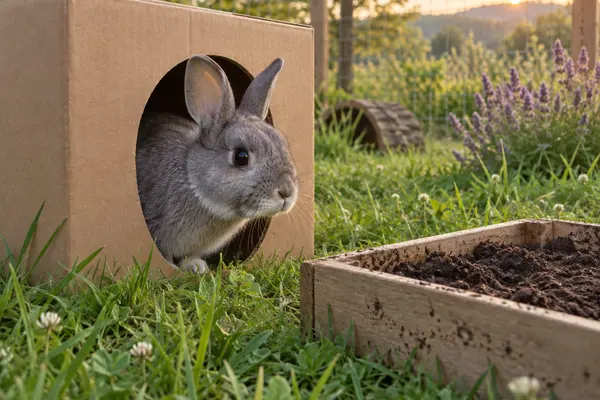
Give each rabbit easy access to a secure hiding place, such as a wide tube or a cardboard box, and materials that let it dig.
RABBIT FACTS
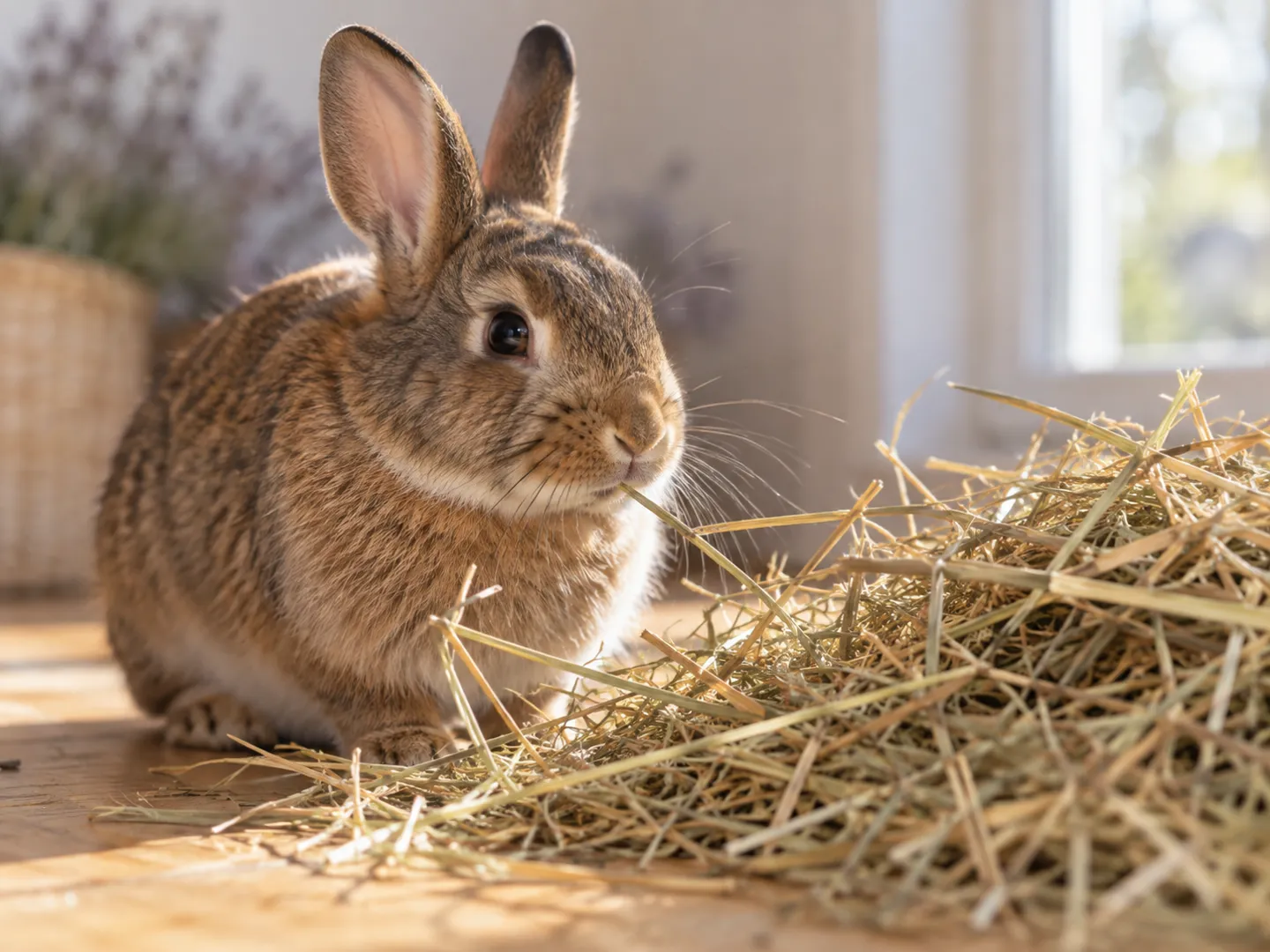
The PDSA’s 2026 report estimates that 2% of UK adults have a rabbit, a population of around 700,000 pet rabbits.
A rabbit’s teeth grow throughout its life. A high-fibre diet, mainly hay or grass, is what wears them down.
Rabbits are naturally most active in the early morning and evening, around dawn and dusk, and overnight. That is why the guidance favours a shelter joined to a run.
In a study of 6,349 pet rabbits at 107 UK vet practices, the most common problems were overgrown nails (16%), overgrown molars (7.6%) and overgrown incisors (4.3%).
The same Royal Veterinary College study found an average lifespan of 4.3 years. Flystrike was the most common recorded cause of death, at 10.9%.
QUICK QUESTIONS
Short answers to the questions people ask most.
The PDSA gives a recommended minimum of 3 m by 2 m by 1 m high for two average rabbits. In its 2024 report, 22% of pet rabbits, around 180,000, lived in housing below that standard.
Hay and/or grass should make up around 85% of a rabbit’s diet, according to the PDSA, which recommends at least a bundle as big as the rabbit every day, and unlimited hay where possible.
Scottish Government guidance says rabbits benefit from the company of another rabbit. Even so, the PDSA’s 2024 report found 42% of pet rabbits lived alone and a further 8% only with another species.
In a Royal Veterinary College study of 6,349 pet rabbits at 107 UK vet practices, published in 2019, the average lifespan was 4.3 years. Flystrike was the most common recorded cause of death, at 10.9%.
Scottish Government guidance says rabbits must always have fresh, clean water, and that a rabbit on a largely dry diet drinks around 50 to 100 ml per kilogram of body weight a day.
Sources
A NAME WITH LONG EARS
doodlerabbit.com is part of the DoodleSale portfolio. It isn't in an auction right now, but you can ask about leasing it.